

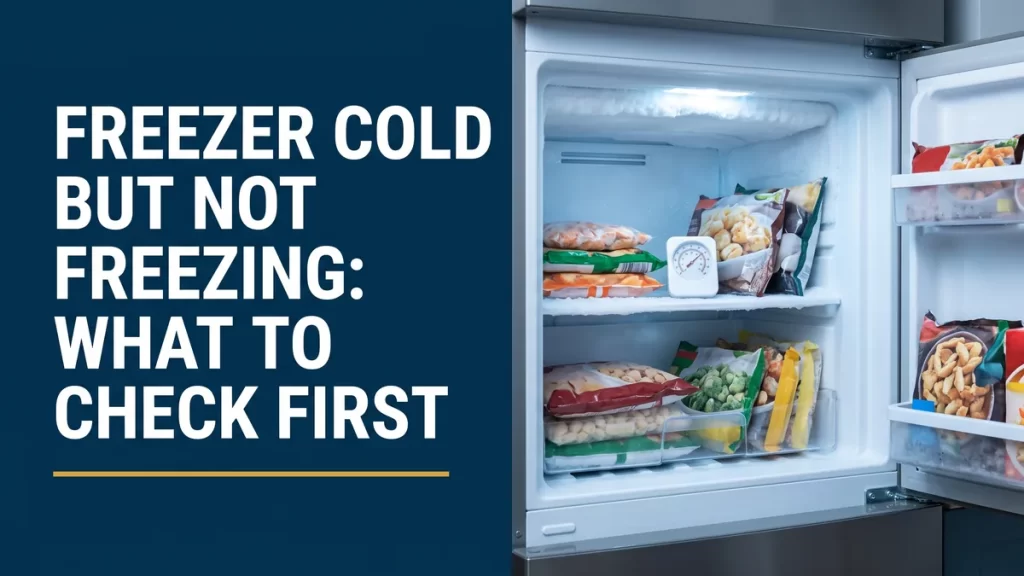
Dealing with a freezer that’s cold but not freezing is one of the more confusing appliance problems, because the unit clearly still runs. Nine times out of ten, the cause is airflow, a door that is not sealing, or a defrost part that has quit, not a dead compressor. This guide walks you through what to check first, in order, before you call anyone about troubleshooting a freezer that isn’t freezing.
Jacksonville makes this trickier than it is up north. Our heat and humidity push refrigeration systems harder, so a freezer that would limp along in a cooler climate tips over the edge here. Start at the top of the list and stop the moment food starts freezing again.
In this article
The first five things to check
Before you assume the worst, rule out the easy stuff. Most service calls for a freezer cold but not freezing trace back to one of these, and all five take under ten minutes with no tools beyond a flashlight and a thermometer.
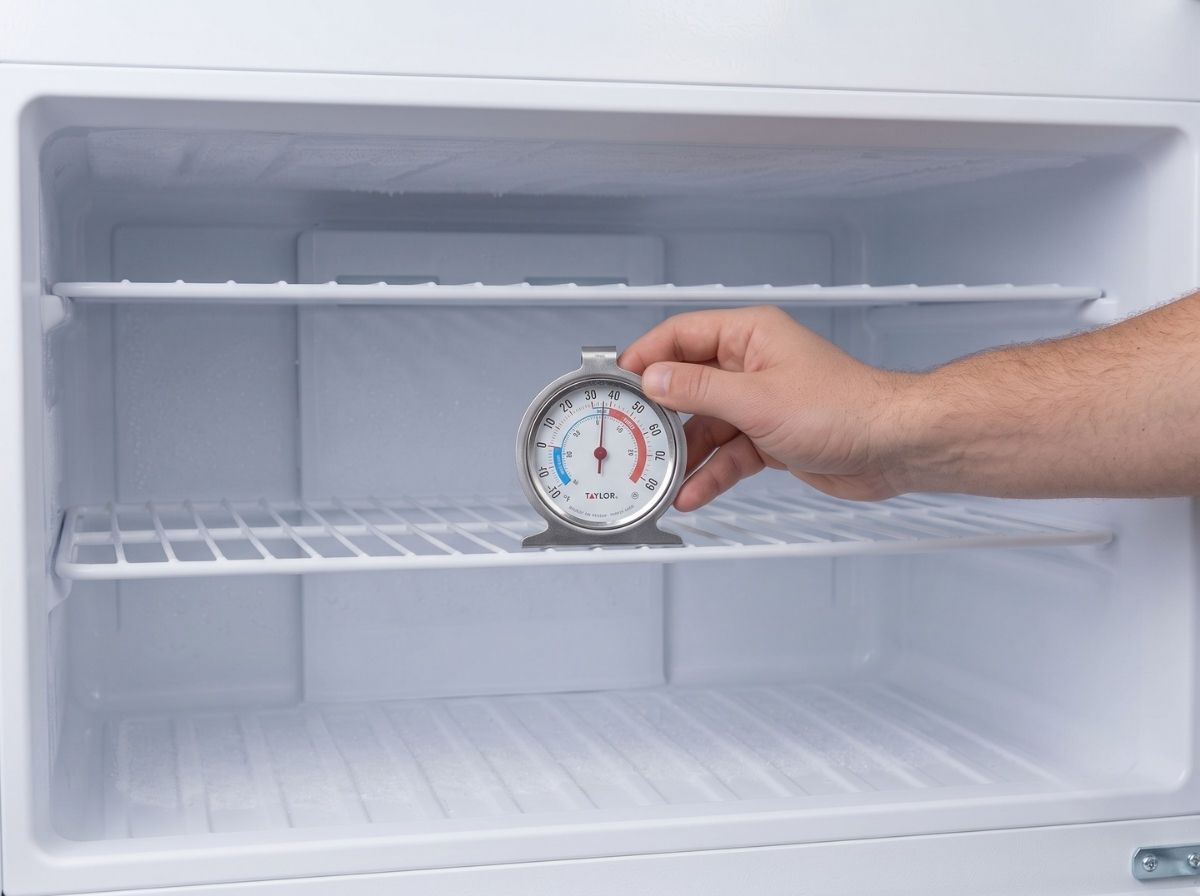
- Read the actual temperature. Put a thermometer in the middle of the freezer, not against a wall. A working freezer holds 0 degrees Fahrenheit. If it reads 10 to 25 degrees, the unit is running but losing the fight.
- Check how full it is. A freezer that is nearly empty struggles to hold cold. So does one packed so tight that air cannot move. Aim for about three-quarters full.
- Feel the door gasket. Run your hand around the seal for cold air leaking out. Close the door on a dollar bill; if it slides out with no drag, the gasket is worn.
- Look at the vents. Find the interior vents (usually along the back or top) and make sure boxes and bags are not blocking them.
- Check the temperature dial. It sounds obvious, but a bumped dial or a kid-adjusted setting is a shockingly common cause. Set it to the mid-cold range and wait 24 hours.
Why airflow is the usual culprit
A freezer does not make cold the way a room air conditioner does. It circulates already-frozen air from a coil behind the back panel using a small fan called the evaporator fan. When that airflow gets choked, the space near the coil stays icy while the rest of the compartment drifts warm. That is the classic pattern: one shelf frosty, the door shelves soft.
Two things kill airflow. The first is a packed freezer where bags block the vents. The second is a coil buried in frost, which we get to in the next section. If your ice cream on the door is melting while the back wall is caked in ice, you have found your problem. The same fan logic explains a lot of refrigerator section problems where it will not stay cold, since many models cool the fresh-food side with air pushed over from the freezer.
Did you know?
In a single-compressor fridge-freezer, the freezer cools first and the refrigerator gets its cold second-hand through a damper. So when the freezer airflow fails, the fridge above or beside it often warms up too. Two symptoms, one root cause.
When the defrost system is the problem
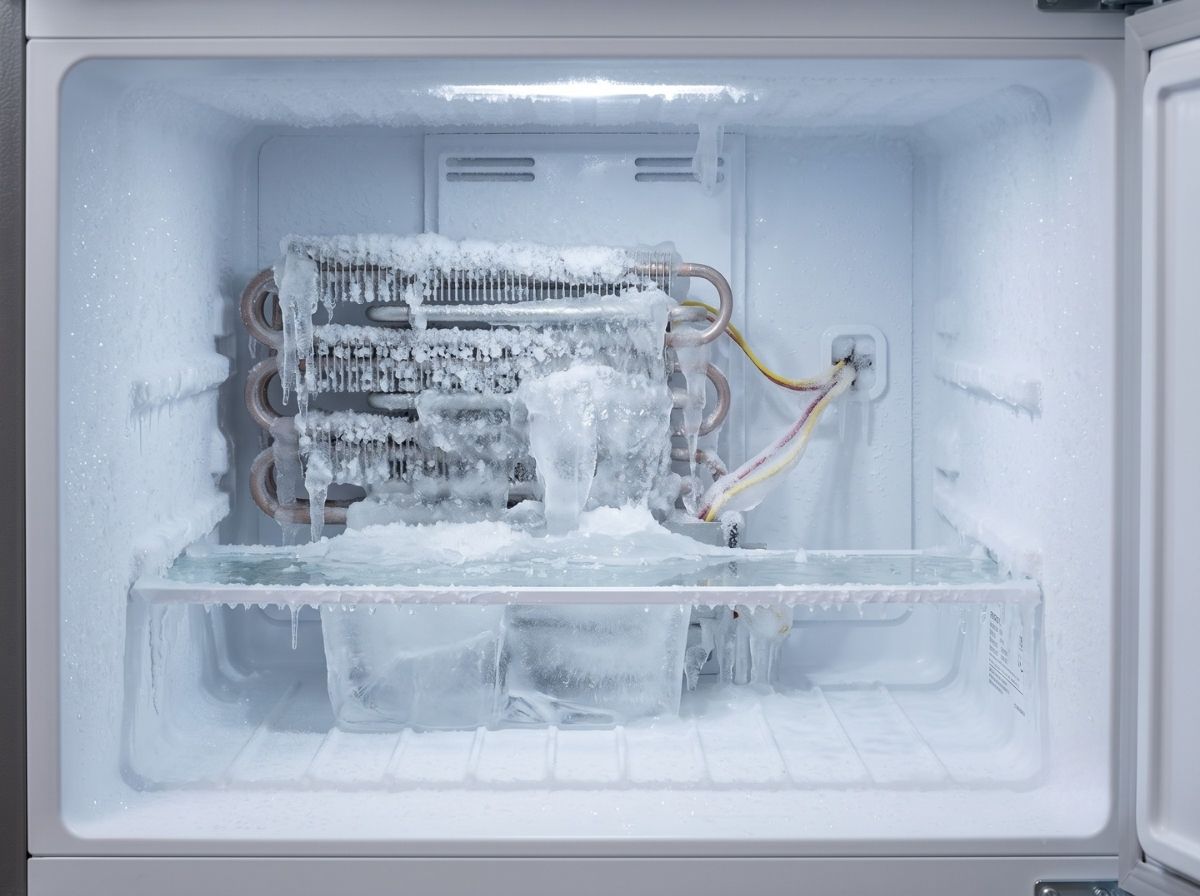
Every frost-free freezer runs a defrost cycle a few times a day to melt frost off the evaporator coil. When a part in that cycle fails, frost builds into a solid block of ice over the coil, air can no longer pass through it, and you get a freezer cold but not freezing. The three usual suspects are the defrost heater, the defrost thermostat, and the defrost timer or control board.
You can spot the symptom without opening anything. If you pull the back interior panel loose (many just unclip) and see a thick white wall of ice on the coil, the defrost system has stopped working. That is the point where guesswork ends and a real diagnosis begins, because testing a heater or thermostat requires a multimeter and knowing which reading is normal for your model.
How Jacksonville humidity makes it worse
Every time you open the freezer in a Jacksonville kitchen, humid Florida air pours in and freezes onto the coil and walls. In a dry climate, that frost sublimates away between defrost cycles. Here, it piles up faster than the defrost cycle can clear it, which is why local freezers frost over and lose their edge sooner than the manual promises.
Heat is the other half of the problem. When your kitchen sits at 80 degrees in August, the compressor runs longer and hotter to hold 0 degrees inside, and any weak link (a tired gasket, a marginal fan, or an aging control board) shows up faster. The U.S. Environmental Protection Agency notes that refrigeration is one of the biggest energy users in a home, and a struggling unit in our climate quietly runs up your power bill while it fails. You can see current efficiency standards on the ENERGY STAR refrigerator guide.
Pro tip
Keep the freezer away from the wall by an inch or two and vacuum the condenser coils underneath or behind it twice a year. In a humid, dusty Florida garage or kitchen, clogged coils are one of the top reasons a freezer cold but not freezing slowly loses its cooling capacity.
When to stop and call a technician
Some of this you can handle on a Saturday. Some of it you should not touch. The line is simple: cleaning, settings, and airflow are fair game; anything sealed, electrical, or refrigerant-related is not. Use the table below to decide where you land.
| Symptom | Likely Cause | DIY or Technician? |
|---|---|---|
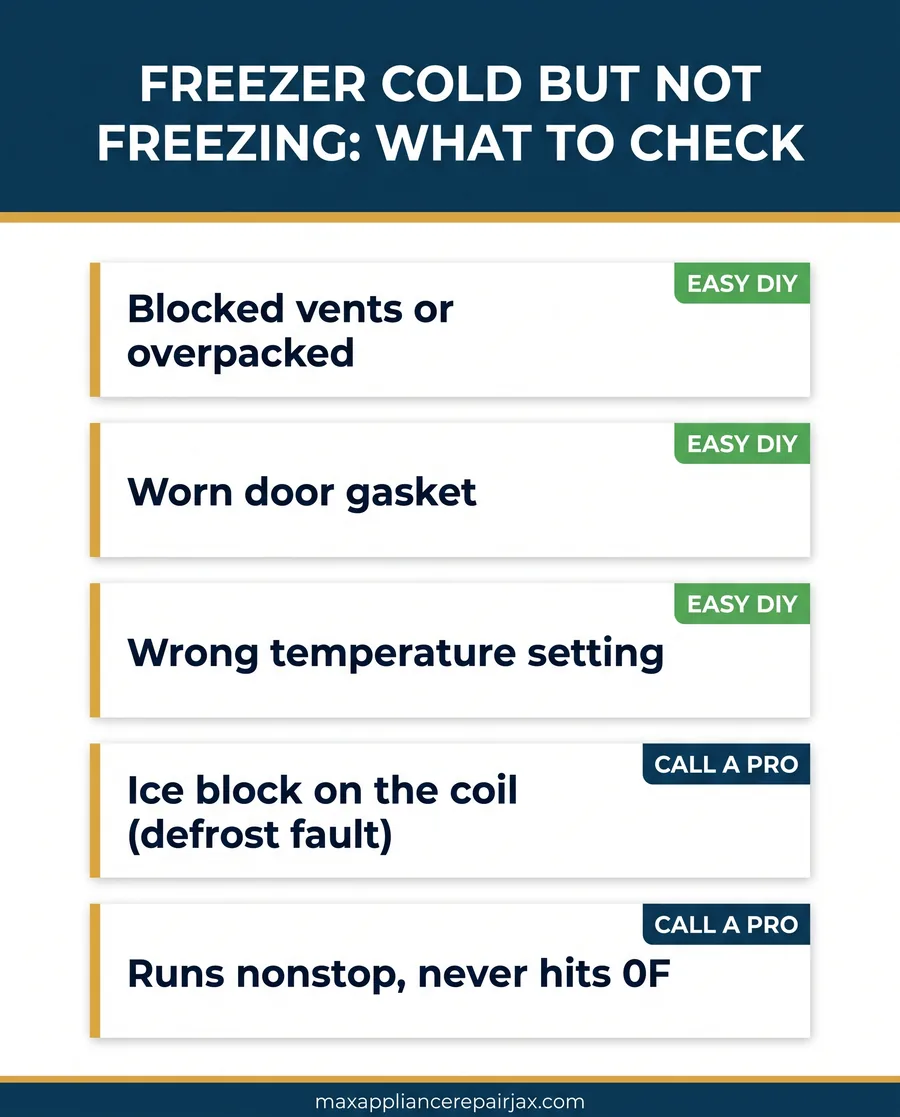
| Door shelves soft, back wall frosty | Blocked vents or overpacking | DIY: Clear the vents |
| Air leaks around a closed door | Worn or torn door gasket | DIY: Replace the gasket |
| Solid block of ice on the coil | Failed defrost heater, thermostat, or board | Technician |
| Freezer runs constantly, never reaches 0°F | Weak sealed system or low refrigerant | Technician |
| No fan sound, warm and quiet inside | Failed evaporator fan or control board | Technician |
| Warm and clicking every few minutes | Failing compressor or start relay | Technician |
If you have cleared the vents, checked the seal, confirmed the setting, and waited a full day, and the freezer still will not hold food frozen, the problem is inside the sealed or electrical system. That is when a hands-on diagnosis pays for itself, because replacing the wrong part is the most expensive way to fix it.
Download the free quick guide
A one-page checklist to walk through the common causes before you call anyone.
Frequently Asked Questions
Checked the vents, the seal, and the setting and your freezer still will not hold food frozen? That points to the sealed or defrost system, and guessing gets expensive. Max Appliance Repair diagnoses and fixes cooling problems across Jacksonville, from Riverside and San Marco to Mandarin and the Beaches. Reach out for a service appointment and we will tell you exactly what failed before any parts get swapped.
