

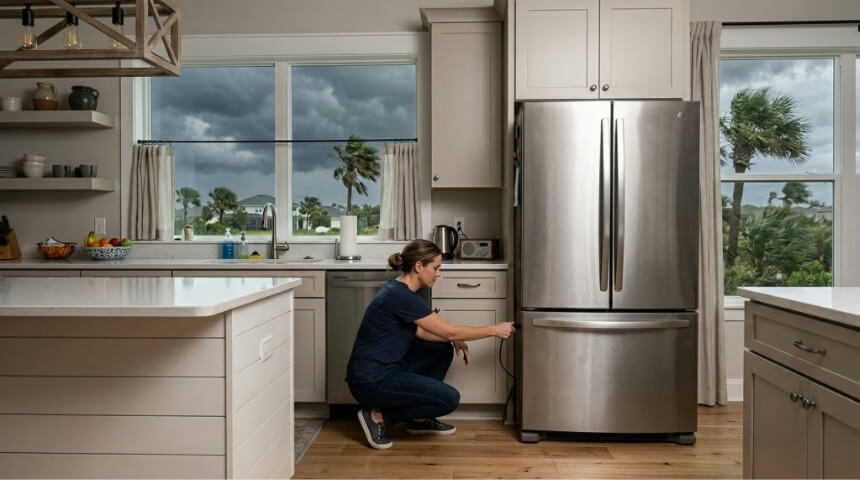
Hurricane season is the single biggest threat to the major appliances in any Jacksonville home. Between salt-laden storm surge along the beaches, the multi-day power outages that follow even a Category 1 landfall, and the lightning strikes that fry refrigerator control boards, the appliances in your kitchen and laundry room take more abuse in one storm than they do the rest of the year combined. The good news is that almost every storm-related appliance failure is preventable with about an hour of prep before the storm and a careful 20-minute restart after the power comes back. Here is the checklist I give every Duval County customer who calls in June.
Why Appliances Fail During Storms
We sit squarely in the Atlantic hurricane zone, and the National Hurricane Center typically issues at least one named-storm advisory affecting Northeast Florida each season. The damage your appliances take during a storm comes from four sources, in roughly this order:
- Power surges from lightning, downed lines, and the moment utility power is restored after an outage. These kill control boards on refrigerators, ovens, washers, dishwashers, and microwaves.
- Extended outages that thaw refrigerator and freezer contents, spoil sealed-system performance, and force compressors to restart against warm loads.
- Salt water and storm-surge flooding in beaches neighborhoods and low-lying parts of San Marco, Riverside, and Atlantic Beach. Salt water on appliance electronics is almost always a total loss.
- Wind-driven rain through gable vents, chimneys, and dryer vents that drips onto the back of laundry-room appliances and shorts out terminal blocks.
Before Storm Appliance Prep Checklist
Start the moment a tropical system enters the Gulf or moves inside the cone for Northeast Florida. Do not wait for the watch to become a warning. Coordinate with the City of Jacksonville Emergency Preparedness guidance and run the appliance steps in parallel.
Refrigerator and Freezer (24 to 48 hours out)
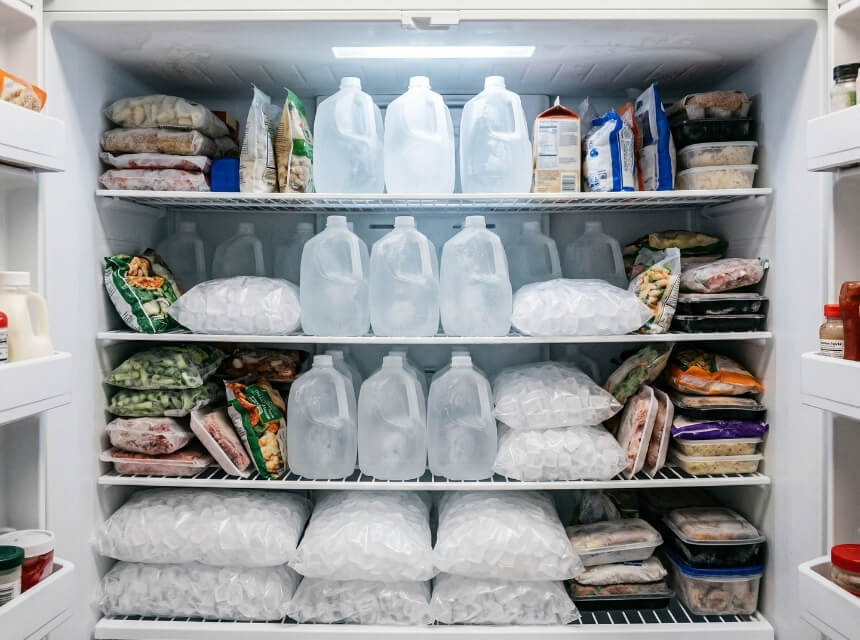
- Turn the refrigerator and freezer to their coldest settings. A cold mass holds temperature longer than a warm one and buys you several hours of safe storage during a power outage.
- Fill empty freezer space with bagged ice or sealed jugs of water. Frozen mass is a thermal battery.
- Photograph the inside of the refrigerator and freezer for insurance documentation. Most homeowner policies cover food spoilage from named storms but require proof.
- Eat or move perishables you cannot afford to lose to a working second fridge or a friend inland.
Washer and Dryer (24 hours out)
- Run a final load early so your laundry pile is small when the power goes out.
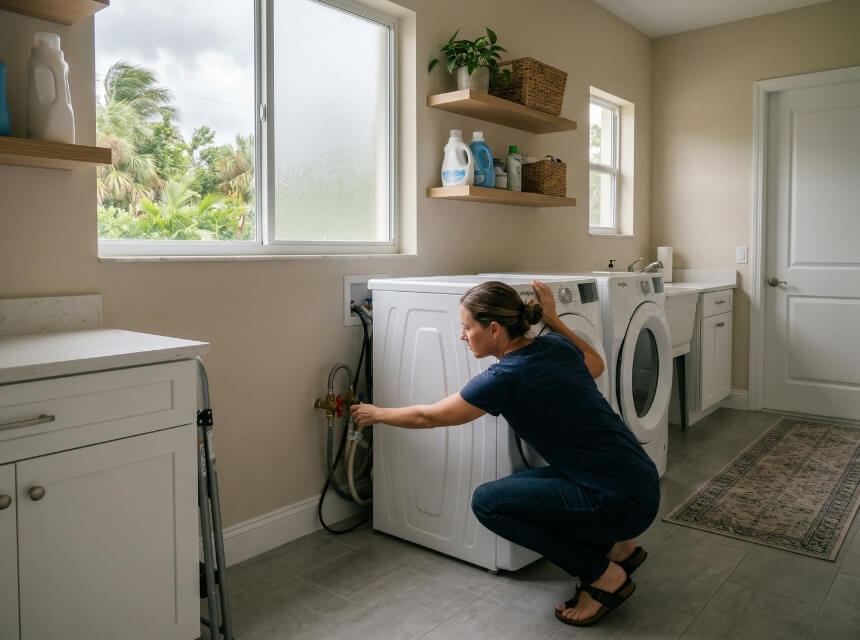
- Turn off the hot and cold water shutoff valves behind the washer. Storm surge and main breaks can pressurize lines unpredictably.
- Clean the dryer lint trap and vent. Hurricane-force winds can drive debris back into the vent line and create a fire hazard the first time you run the dryer after the storm.
Range, Oven, and Cooktop
- If your range is gas, leave the supply on. You may need it during the outage. If electric, no action needed before the storm itself.
- Clean grease off the cooktop and inside the oven. Power surges sometimes trigger the self-clean cycle on certain models when power is restored.
Dishwasher
- Run any cycle in progress to completion and leave the door cracked to dry. A wet, sealed dishwasher in a hot powerless house grows mold within 48 hours.
Unplug Everything Before the Storm
This is the step Jacksonville homeowners skip most often, and it is the one that prevents the most damage. Once you have prepped each appliance, unplug your refrigerator, microwave, dishwasher, washer, dryer, and any countertop appliances before the storm. If you have a hardwired range or wall oven, switch off its breaker at the panel. This protects every control board from the surge that almost always rides in with restored utility power.
Close Your Fridge During the Storm
The USDA rule for homeowners is straightforward, a closed refrigerator holds safe temperatures for about four hours, and a full freezer holds for about 48 hours. Open the doors as little as possible. Do not put hot food into a powerless fridge. If the outage stretches past 4 hours, move perishables to a cooler with ice. After 4 hours above 40 degrees, throw out meat, dairy, eggs, leftovers, and cut produce. For deeper guidance reference the FEMA Hurricane Readiness food safety section.
After Storm Care
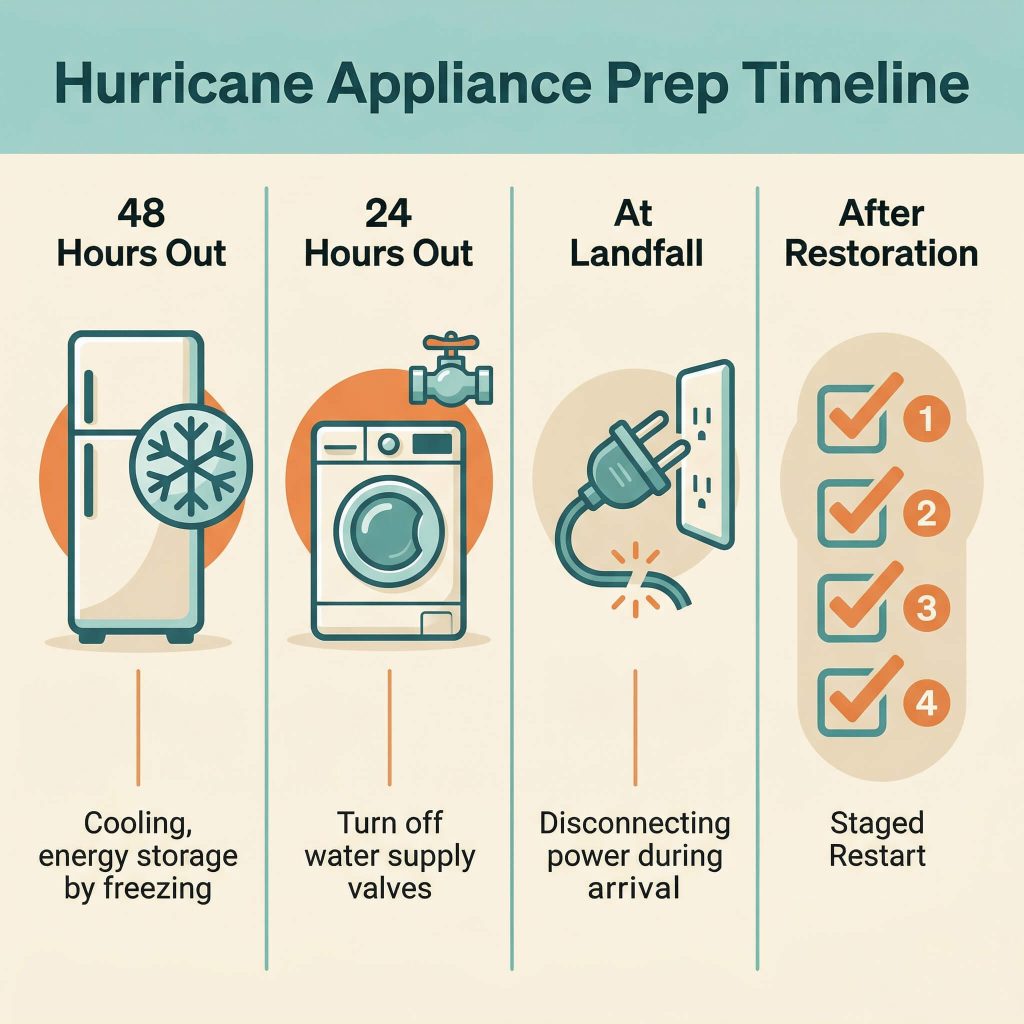
People plug everything back in at once the moment power returns, and the inrush current plus any lingering surge takes out one or more control boards. This is one of the biggest mistakes people make, and one of the most common reasons why ew get called out to fix homeowner fridges after a storm. Do this instead:
- Wait 10 minutes after utility power is confirmed stable. Initial restoration is the surgiest moment.
- Plug in the refrigerator first and let it run alone for 5 minutes before plugging in anything else. This gives the compressor a clean start with a quiet electrical environment.
- Then plug in the dishwasher, washer, dryer, and microwave one at a time, 60 seconds apart.
- Re-open water shutoff valves behind the washer. Run a quick rinse cycle with no clothes to flush any storm debris from the inlet filters.
- Run the dryer empty for 5 minutes before any laundry to confirm no birds, leaves, or debris have entered the vent line.
- Inspect the back of every appliance for water staining or salt residue. Salt on a control board is a delayed failure: the appliance may run fine for a week, then fail when humidity rises.
What to do if Your Appliance Flooded
If storm surge or rising water reached the bottom of any appliance, do not plug it back in. Salt water in particular leaves conductive residue that will short circuits and can start a fire. For freshwater flooding from rain intrusion, a qualified appliance technician can sometimes save a refrigerator or washer by drying and replacing the lower control board, but only if you act within 48 hours before corrosion sets in. EPA Section 608 rules under EPA Section 608 require qualified handling of any refrigerant work that becomes necessary.
Surge Protection That Actually Works
A whole-home surge protector installed at your main panel by a licensed electrician protects every appliance, every TV, and every computer in the house from utility-side surges. Point-of-use surge protectors at the refrigerator, dishwasher, and washer add a second layer for the most expensive appliances. After living through a few Jacksonville hurricane seasons, most homeowners find both layers pay for themselves the first time a transformer pops on the next street over.
Final Thoughts
Storms are part of life here, but losing your appliances doesn’t have to be. A little prep before landfall and a slow, careful restart afterward can save you a lot of money and stress. Most of these steps take minutes, not hours, and they make a real difference when the power finally comes back. If you’re not sure where to start, just remember to unplug early, be patient on restart, and don’t rush anything after the storm passes.
Frequently Asked Questions
Should I unplug my refrigerator before a hurricane?
Yes. Unplug the refrigerator before the storm makes landfall. Pre-cool the contents to the coldest setting first, then unplug. A closed refrigerator holds safe temperatures for about four hours unpowered. Unplugging protects the control board and compressor from the power surge that almost always rides in with restored utility power.
How long will my freezer keep food frozen during a power outage?
A full freezer holds frozen temperatures for about 48 hours and a half-full freezer for about 24 hours, as long as the door stays closed. Filling empty space with sealed jugs of water before the storm doubles or triples your safe time.
Is it safe to use my appliances after a hurricane?
Only if no water reached them and you follow a staged restart. Plug the refrigerator in first, wait 5 minutes, then add other appliances one at a time. If any appliance was flooded, especially by storm surge salt water, do not plug it in. Have a technician inspect it first.
Why do refrigerators fail after hurricanes?
The most common failure is a fried main control board from the power surge when utility power is restored. The second most common is sealed-system damage from the compressor restarting against a warm load after a long outage. Both are preventable by unplugging before the storm and using a staged restart afterward.
Can I run my appliances on a generator during a hurricane outage?
Yes, but only with a properly sized generator and a transfer switch installed by a licensed electrician. Do not run a refrigerator or sealed-system appliance off an undersized generator or one with a dirty sine wave, because both can damage the compressor and electronics. A 5,000-watt inverter generator handles a typical refrigerator and a few small loads safely.
