

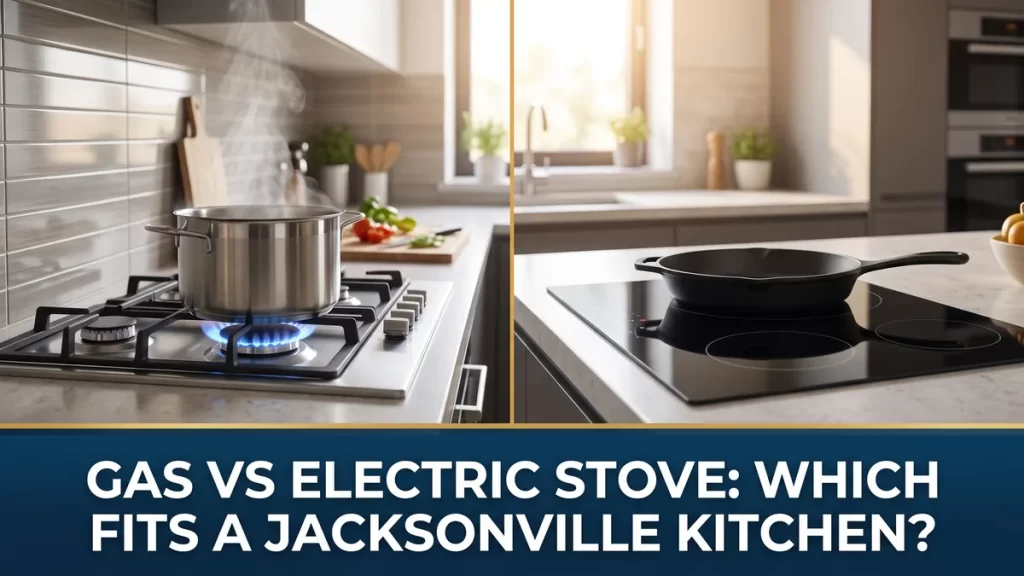
The gas vs electric stove question does not have one right answer, it has a right answer for your kitchen. Gas gives you instant, responsive heat and lower running costs where natural gas is cheap. Electric, and especially induction, wins on even baking, easy cleaning, and a cooler, safer surface. In a Jacksonville home the deciding factors are often the hookups you already have and how our climate affects your kitchen. This guide breaks down each factor so you can pick with confidence, and know when fixing a stove that heats unevenly is worth fixing versus replacing.
We install and service both types in kitchens across Duval County, so this is the same rundown we give homeowners who ask us which way to go when they remodel.
In this article
The quick answer for most kitchens
If you already have a gas line to the kitchen and you cook a lot, gas is usually the easy call: it heats the second you turn the knob, responds instantly when you dial it down, and keeps working during a power outage, which matters in hurricane country. If your kitchen is wired for a 240-volt electric range and you bake more than you saute, electric or induction is the smoother, cleaner choice.
The trap people fall into is choosing the type that means adding a hookup they do not have. Running a new gas line or upgrading electrical service for a range can cost more than the appliance. Start with what your kitchen is already built for, then weigh the cooking differences below.
Gas vs electric stove, factor by factor
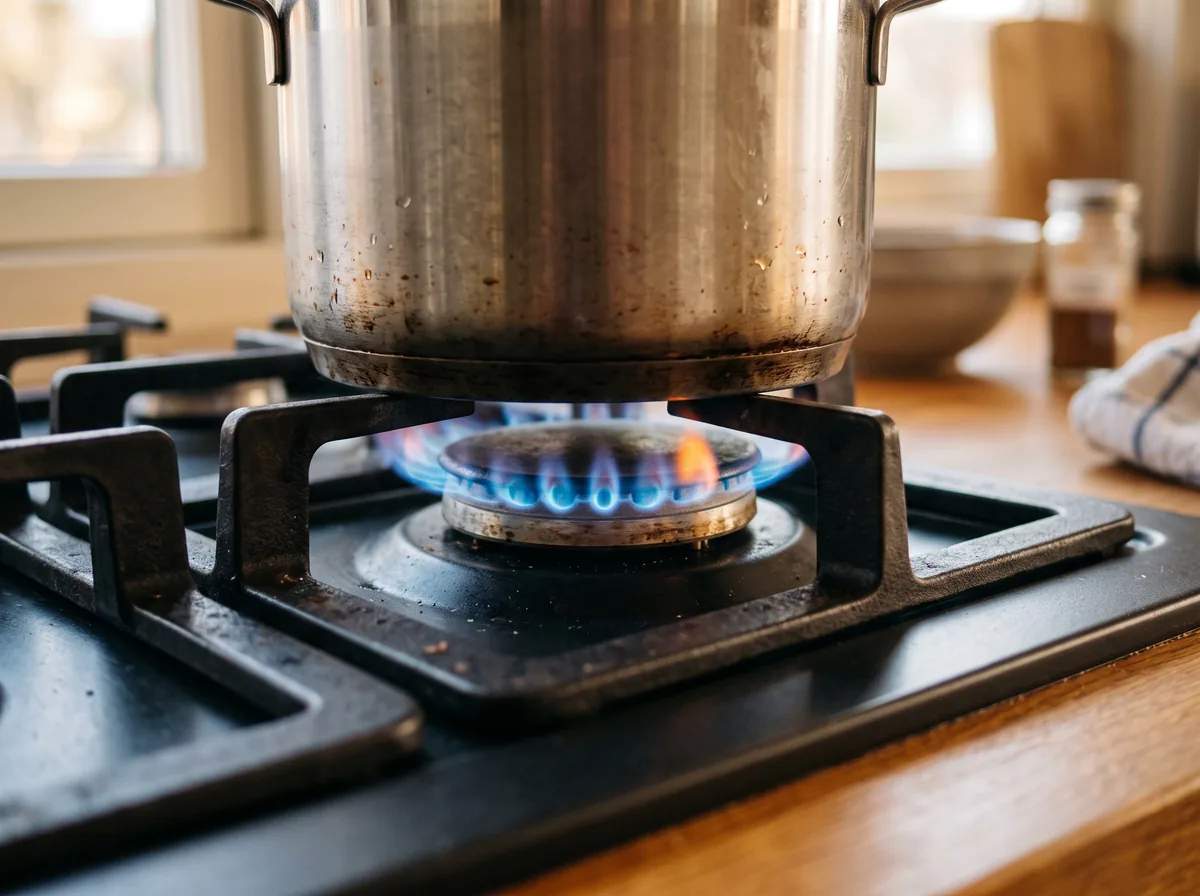
Here is where the gas vs electric stove decision gets specific. Each type has real strengths and real trade-offs. This table lays out the factors that actually change your daily cooking, with no dollar figures attached, because the right pick depends on how you cook, not just what something costs.
| Factor | Gas stove | Electric / induction |
|---|---|---|
| Heat control | Instant, visual flame, responds the moment you turn it | Electric coil is slow to change; induction is instant and precise |
| Even baking | Ovens can have hot spots and drier heat | Electric ovens hold steady, even heat, better for baking |
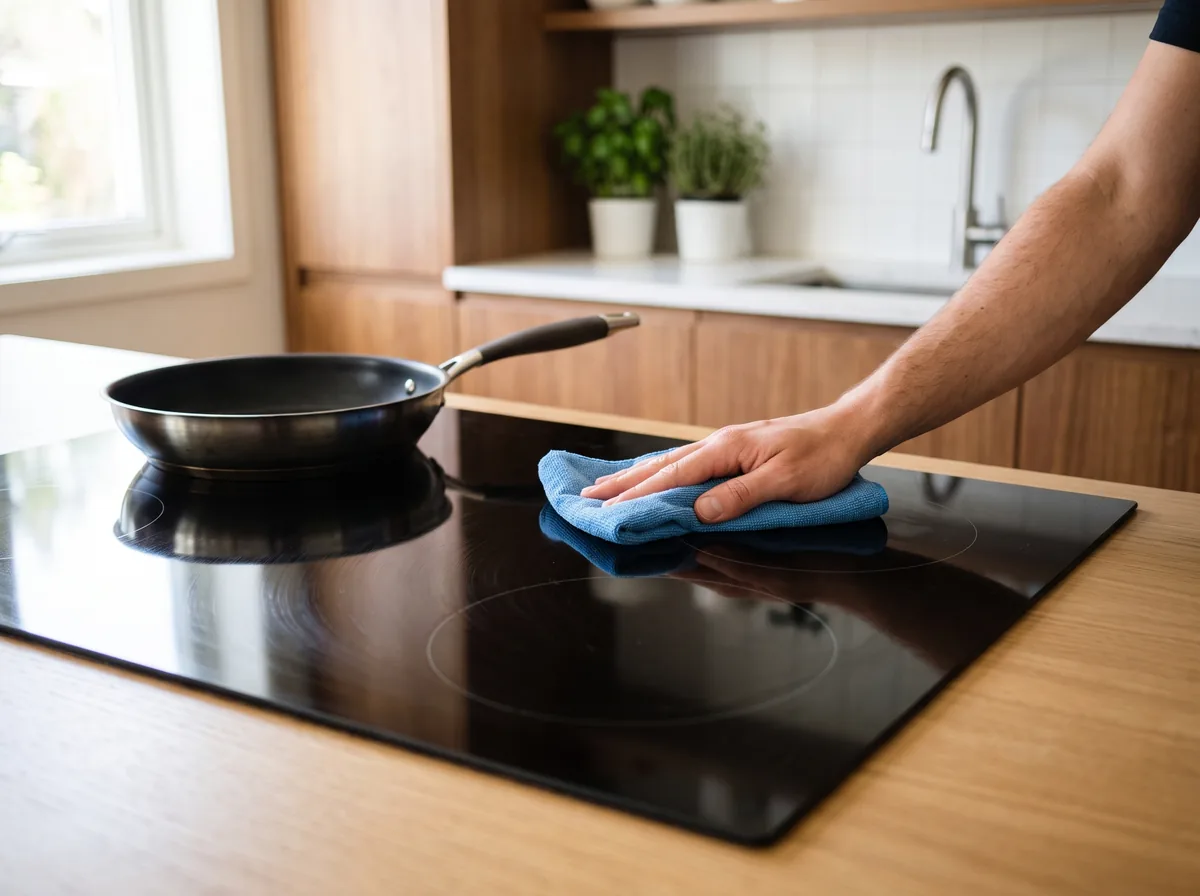
| Cleaning | Grates and burner caps take effort | Flat glass or induction top wipes clean in seconds |
| Surface safety | Open flame, hot grates, gas smell if a burner does not light | Induction stays cool to the touch; electric coils stay hot after |
| Power outage | Keeps working (may need a match to light) | Dead until power returns |
| Installation needs | Needs a gas line and proper venting | Needs a dedicated 240-volt circuit |
What each one costs to run
Running cost depends on local energy prices, and in Florida that math leans a specific way. Electricity here is not the cheapest in the country, but many Jacksonville homes have no natural gas service at all, so an electric or induction range avoids the cost of adding a gas line. Where gas is already piped in, it is often cheaper per meal to cook with, especially for heavy stovetop cooking.
Induction is the efficiency winner on the cooktop: because it heats the pan directly, less energy escapes as waste heat into your kitchen. That is a real perk in a Florida summer, when every bit of stray heat makes the air conditioner work harder. For a neutral look at how households actually use energy, the U.S. Energy Information Administration breakdown of home energy use shows where cooking fits against cooling and other loads.
What matters in a Jacksonville kitchen
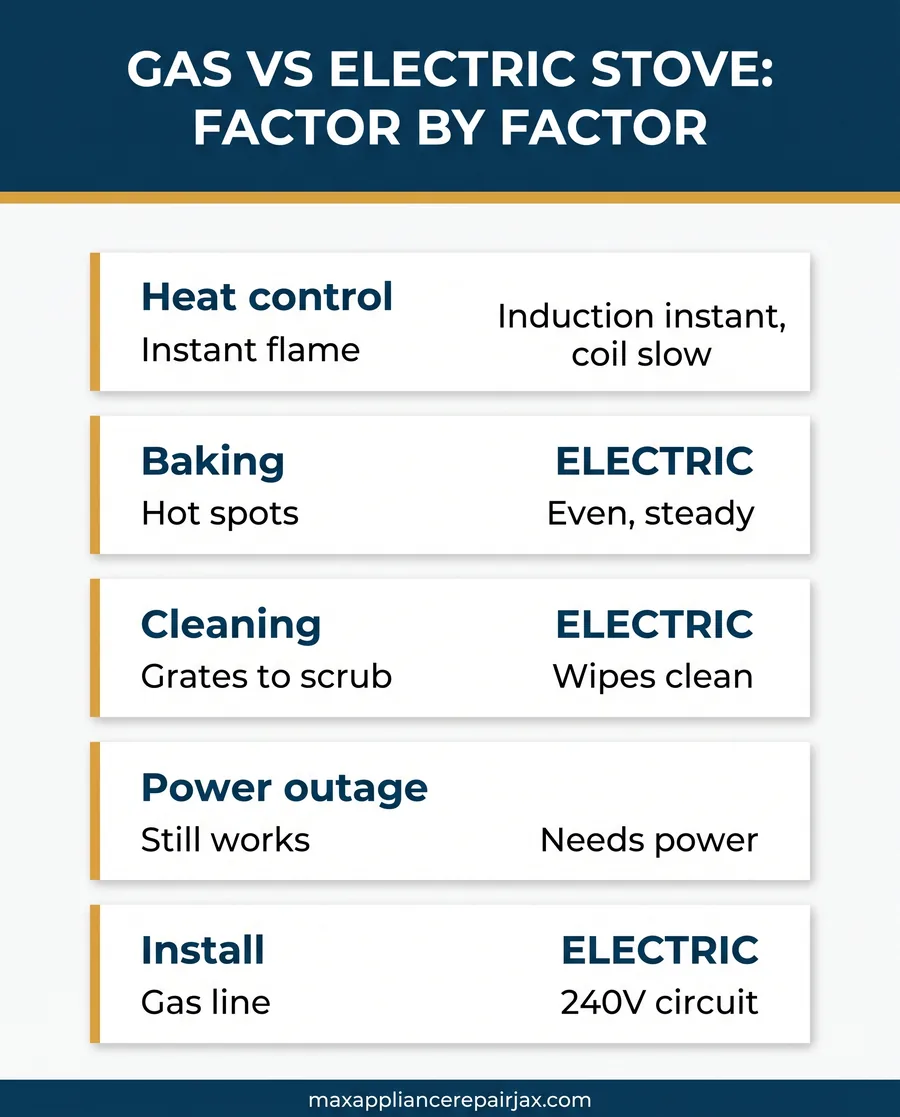
Our climate tilts the decision in ways it would not up north. Summer heat is the big one. A gas flame and a glowing electric coil both dump heat into the room, which fights your air conditioning from June through September. Induction keeps the kitchen noticeably cooler because the heat goes into the pan, not the air.
Storm resilience pulls the other direction. When a hurricane knocks out power for days, a gas stove still cooks. That single fact keeps a lot of Northeast Florida homeowners loyal to gas even as induction gains ground.
Pro tip
Whichever type you choose, run the range hood every time you cook. In a humid, tightly sealed Florida home, venting cooking moisture and heat outside protects your cabinets, keeps the kitchen cooler, and takes load off the air conditioner. A recirculating hood that just filters air does not do this job.
Thinking about switching types?
Before you commit to switching, walk through three questions. First, what is already run to your kitchen, a gas line, a 240-volt outlet, or both? Second, how do you cook, mostly stovetop searing and simmering, or a lot of baking? Third, what is the resale picture in your neighborhood, since some buyers strongly prefer one type. Answer those honestly and the choice usually makes itself.
And remember that a range acting up does not always mean you need a new one. A burner that will not light, an oven that heats unevenly, or a control panel that has gone dark is often a repairable fault rather than a reason to replace the whole appliance.
Download the free quick guide
A one-page guide to help you pick the right range type for your kitchen and your cooking.
Frequently Asked Questions
Weighing gas against electric for a remodel, or trying to decide whether your current range is worth keeping? Max Appliance Repair works on both fuel types in kitchens throughout Jacksonville, from Southside and Arlington to Orange Park and Ponte Vedra. Get in touch for a service visit and we will give you a straight read on your options before you spend on a new appliance.
