

When your oven smells like burning plastic, the main question to ask is: is the appliance brand new, or has it been working fine for years? A new unit often gives off a harmless plastic odor during the first few uses that fades naturally. However, if an older unit suddenly has this issue, it is a warning that internal wires or plastic items are melting. In that case, turn off the power and contact a licensed oven technician in Jacksonville immediately.
This guide explains what causes the odor, how to separate normal break-in smells from electrical hazards, and what steps you should take right now.
First, is it a new oven? Normal off-gassing explained
Brand-new ovens are built with protective coatings, insulation binders, and factory oils that cure when heated for the first time. During initial use, especially at high temperatures or during a self-clean cycle, these materials release harmless fumes. This process is called off-gassing, and while unpleasant, it is temporary.
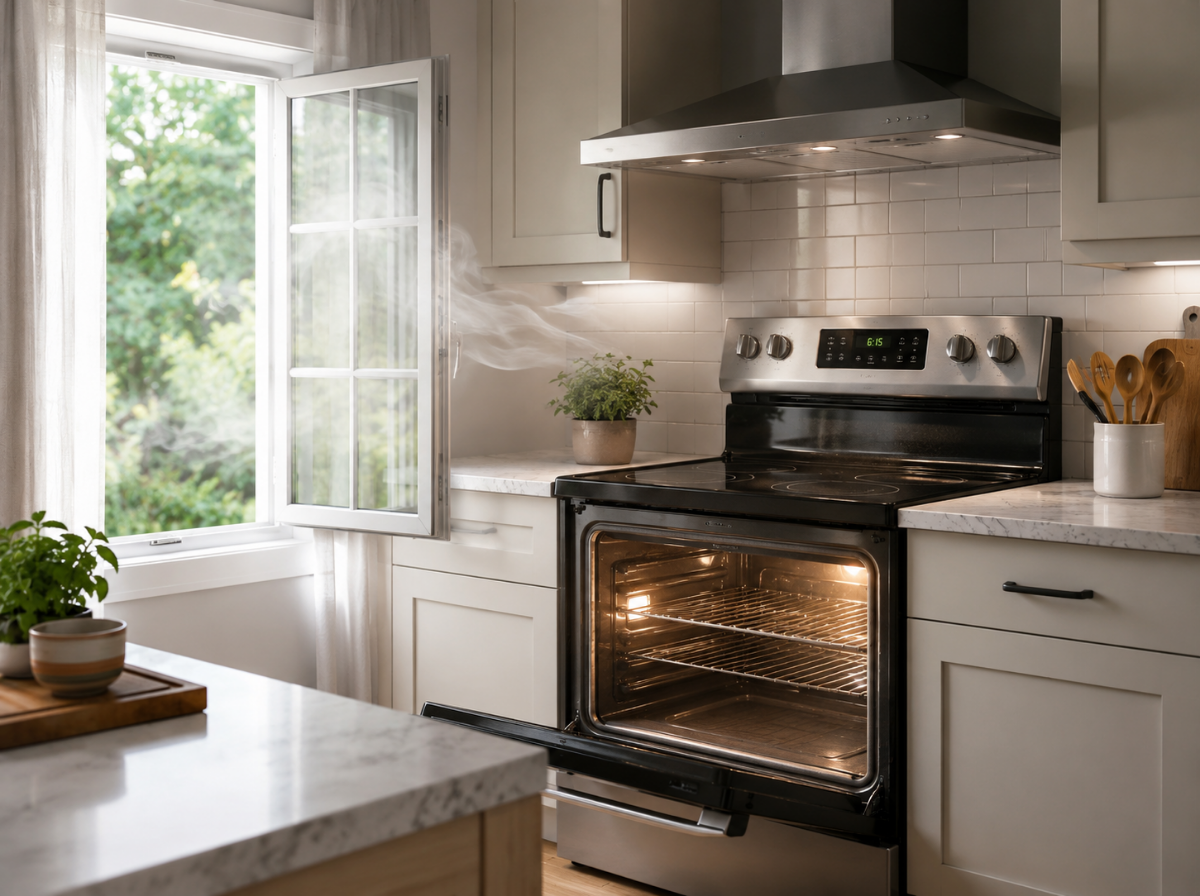
To speed up off-gassing, first make every zip tie, piece of cardboard, and strip of protective film is removed from the racks and door. Then, run your empty oven on a standard Bake setting at 400°F for 30 to 60 minutes with your kitchen well-ventilated (windows open and exhaust fan on). Do not use the Self-Clean cycle for this, as the extreme heat will create excessive smoke.
Quick Take
A new appliance with a fading plastic smell is normal off-gassing. An older unit that suddenly emits strong fumes indicates a component failure that requires inspection.
Why your oven smells like burning plastic
When an established oven smells like burning plastic, an internal component or foreign object is melting. Common causes include:
- Melting Wire Insulation: Internal wires are covered in protective plastic sheathing. Corroded or loose connections near heating elements can arc, overheat, and melt this insulation.
- Failing Heating Elements: A damaged terminal or bad heating element can scorch adjacent terminal blocks and wiring.
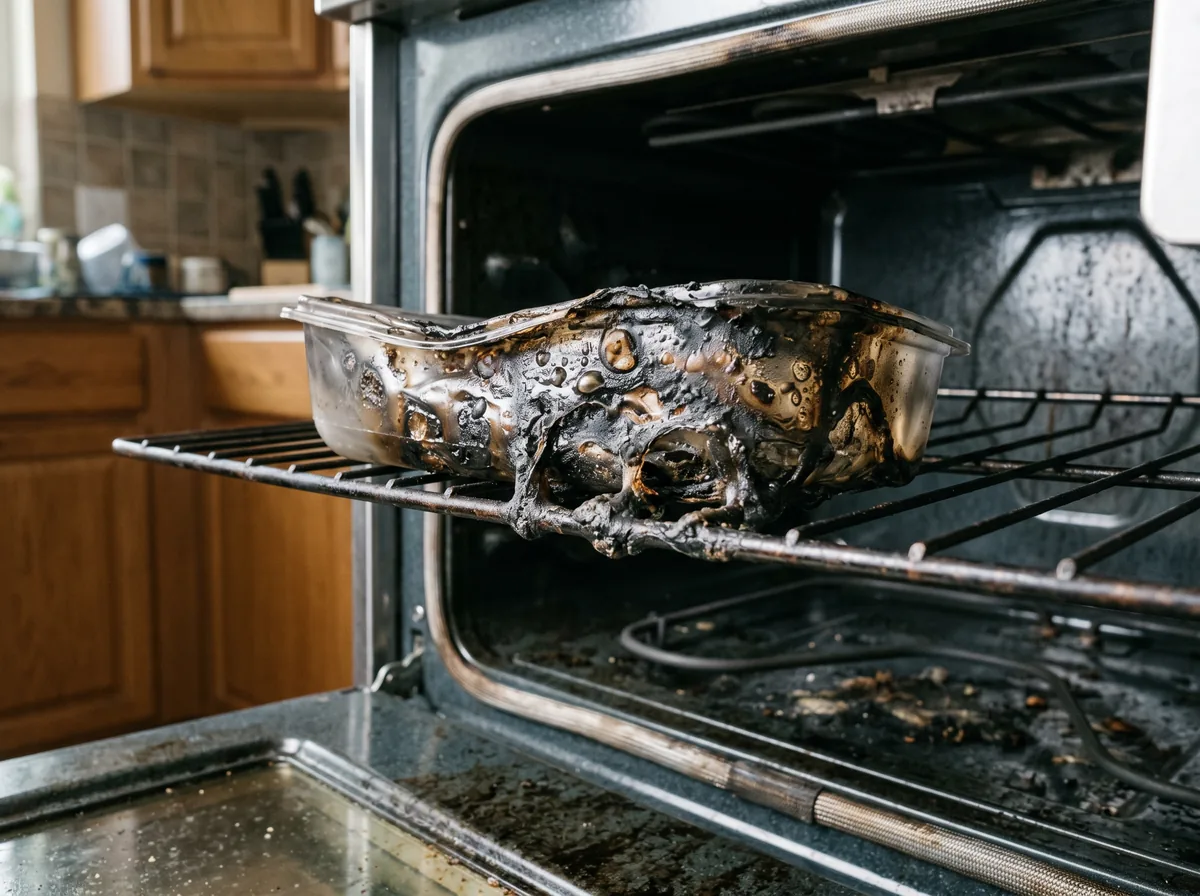
- Melted Plastic Items Inside: Food containers, plastic utensils, or zip-top bags left on the oven racks or floor will quickly melt and smoke.
- Overheating Control Board or Fan Motor: In electronic or convection units, a failing blower motor or circuit board can overheat its housing.
- Degraded Internal Insulation: Shifted or contaminated insulation around the oven cavity can emit sharp chemical odors when exposed to heat.
Melting wire insulation poses a serious fire hazard. For home electrical safety guidelines, consult resources like the Electrical Safety Foundation International.
When to turn off power immediately
If you see smoke or sparks, smell sharp acrid fumes, or if the unit trips your circuit breaker, turn off the oven at the breaker box immediately and schedule a professional repair.
Break-in smell vs. real electrical hazard
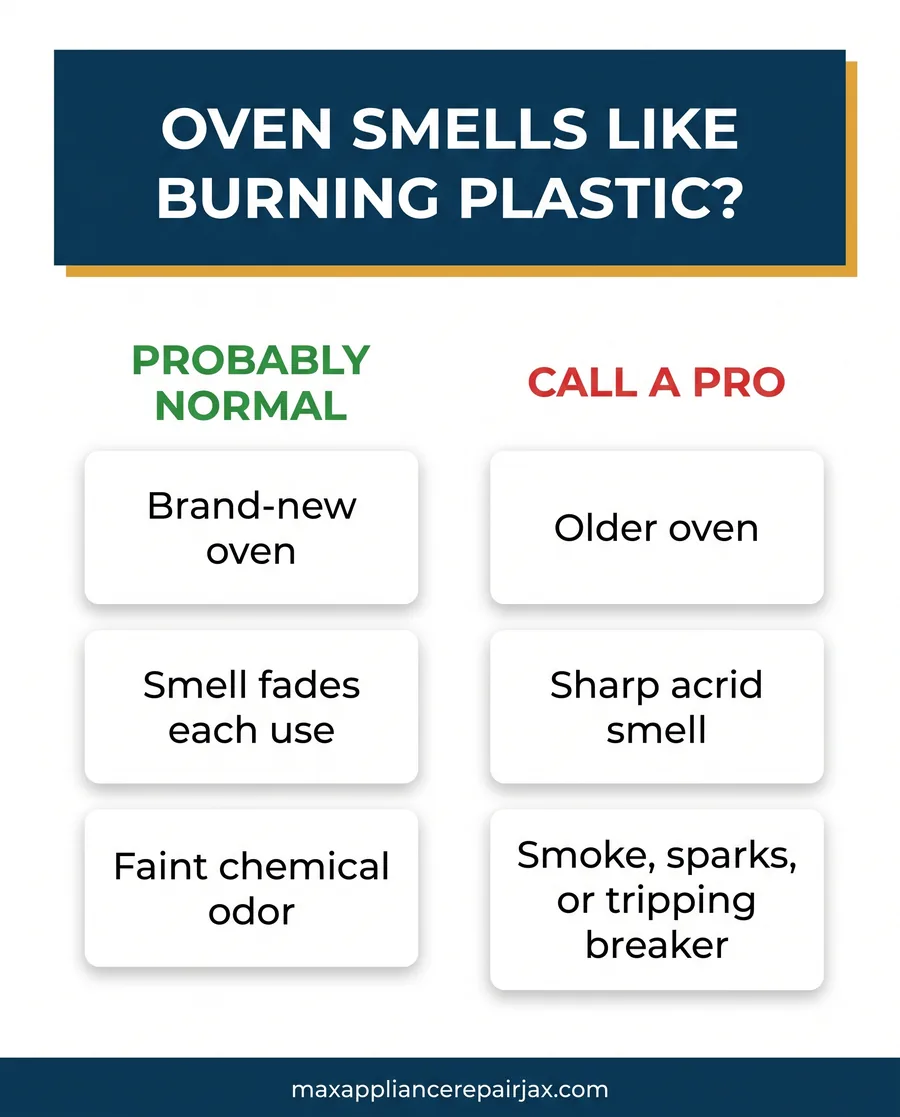
Use this reference table to evaluate whether your appliance requires a burn-in period or professional service:
| Symptom | Normal Break-In Off-Gassing | Electrical Hazard / Fault |
|---|---|---|
| Age of Appliance | Brand new (first 1–3 uses) | In service for months or years |
| Odor Trajectory | Fades with every heating cycle | Gets stronger or appears suddenly |
| Odor Type | Mild chemical or light factory smell | Sharp, acrid burning plastic or wire smell |
| Visual Signs | None | Visible smoke, sparks, or scorch marks |
| Electrical Function | Normal operation | Tripped breaker, warm outlet, or power drop |
| Action Required | Ventilate kitchen and run empty cycles | Disconnect power and call a certified technician |
Is a burning plastic odor in an oven always dangerous?
Not always. A brand-new unit curing its coatings or a plastic object accidentally dropped onto a rack can cause strong odors without permanently damaging the unit. However, if your oven smells like burning plastic and it isn’t brand new, treat it as a potential electrical hazard until properly inspected.
What to do right now (step-by-step)
- Turn off the heat: Immediately turn off all bake and broil settings.
- Disconnect power: If you suspect melted wiring or see smoke, unplug the range or turn off its breaker in your main panel.
- Inspect the interior: Once cool, check racks, elements, and the floor for melted plastic containers, zip ties, or food packaging.
- Ventilate the area: Turn on range hood fans and open nearby windows to clear fumes.
- Evaluate appliance age: If the unit is brand new, run a brief burn-in cycle. If it is an older model, keep it turned off.
- Schedule service: If the smell persists, returns, or stems from an electrical fault, keep the unit powered off and contact an appliance repair specialist.
How to prevent plastic odors in your oven
Prevent future odor issues by following these maintenance tips:
- Avoid using your oven cavity for storing plastic containers, cutting boards, or serving dishes.
- Always inspect the racks and oven floor before preheating.
- Keep the interior clean of grease buildups that can scorch and mask electrical smells.
- Ensure heating elements and electrical connections are serviced by certified technicians.
Download the Free Safety Checklist
Get our free one-page guide to identifying oven smells and troubleshooting safety steps.
Frequently Asked Questions
If your oven emits a sharp burning odor, trips breakers, or shows signs of electrical damage, discontinue use immediately. Our technicians service ovens, ranges, and cooktops throughout Jacksonville, including Jacksonville Beach, Atlantic Beach, Orange Park, and Ponte Vedra. Contact Max Appliance Repair today to schedule an inspection.
