
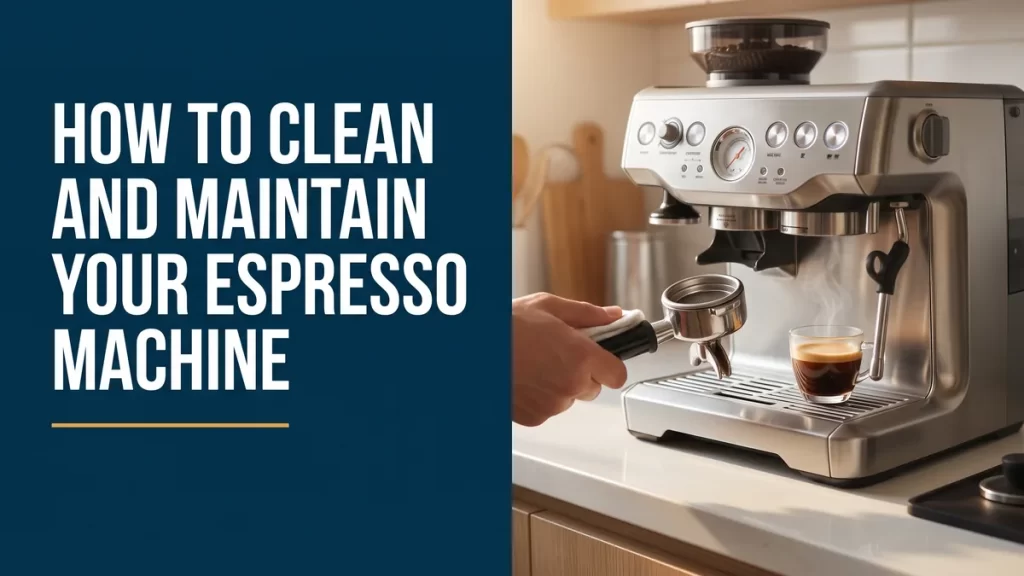
A home espresso machine rewards a little attention and punishes neglect fast. Effective espresso machine maintenance comes down to two essential habits: rinsing it after every use and descaling it on schedule. Skip those steps and your shots get sour, the pump strains, and the machine eventually stops building pressure. Our coffee and espresso machine service in Jacksonville sees these preventable failures constantly, almost all caused by mineral scale and stale coffee oils.
Here is the exact routine that keeps a home machine pulling clean shots for years, why Jacksonville water makes descaling non-negotiable, and the warning signs that mean it is time to call a technician.
Why an espresso machine needs more care than a drip maker
A drip coffee maker moves hot water gently through a basket. An espresso machine forces near-boiling water through tightly packed grounds at nine times atmospheric pressure. That pressure creates a rich shot, but it also turns small maintenance issues into major breakdowns. Mineral scale in a drip machine is a nuisance, but scale inside an espresso boiler restricts flow, disrupts temperature, and forces the pump to work until it fails.
Coffee oils also create ongoing issues. Every shot leaves behind oils that go rancid and coat the group head, shower screen, and portafilter. Left unchecked, those oils create bitter flavors and clog the delicate pathways water flows through. Fortunately, scale and stale oils are easily managed with a quick, regular cleaning routine.
Quick take
Two main forces wear down an espresso machine: mineral scale from tap water and rancid oils from coffee grounds. Daily rinsing handles the oils, while periodic descaling removes scale. Stay ahead of both to avoid costly repairs.
The daily and weekly habits that matter most
Maintaining your machine does not require expensive tools. A five-minute daily rhythm and a slightly deeper weekly clean cover almost everything needed to keep it running smoothly.
Every day after pulling shots:
- Purge the group head for a few seconds to flush lingering grounds off the screen.
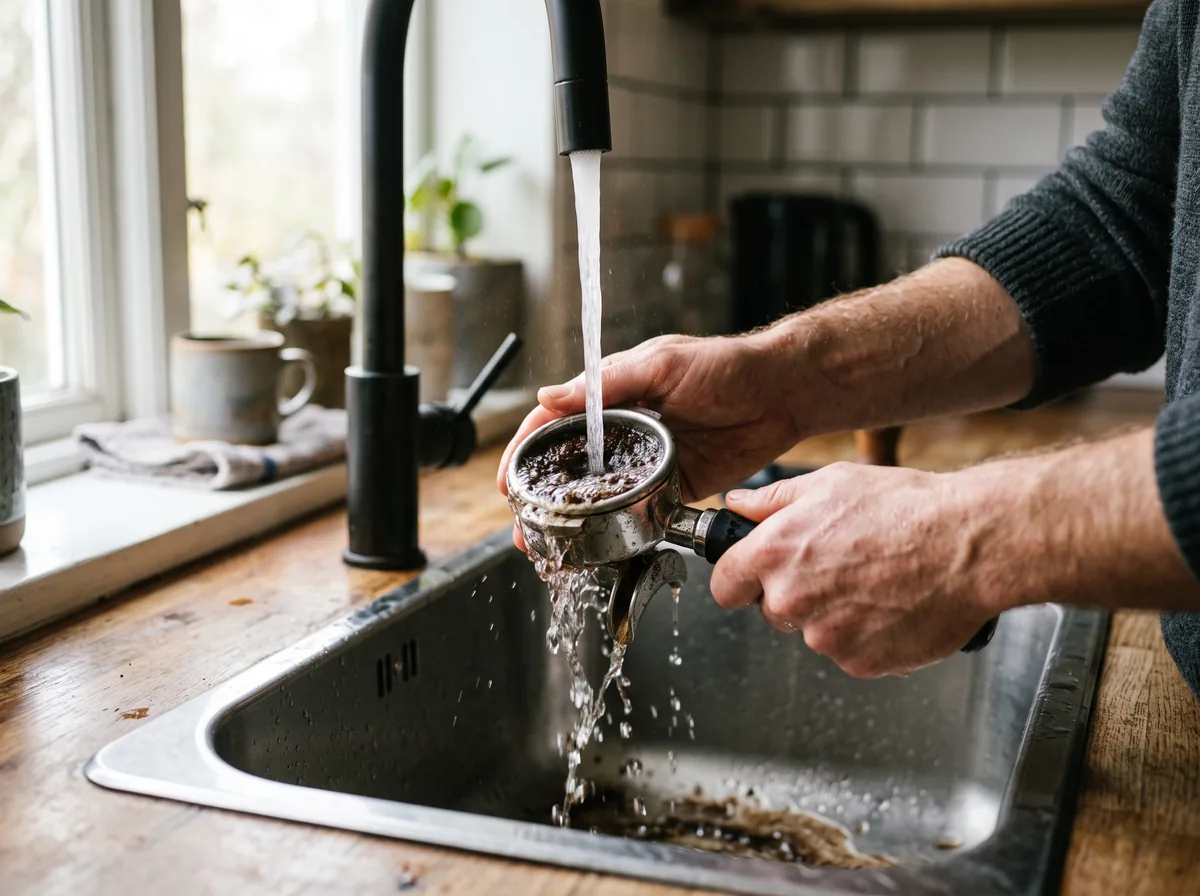
- Knock out the puck and rinse the portafilter and basket with hot water (no soap).
- Wipe the steam wand immediately after frothing milk, then purge it so milk never dries inside the tip.
- Empty and rinse the drip tray to prevent buildup and odors.
Once a week:
- Backflush machines equipped with a three-way solenoid valve using a blind basket and dedicated espresso cleaner.
- Remove the baskets and soak them, along with the metal spouts/head of the portafilter, in a cleaner solution to strip residual coffee oils. (Pro tip: Never submerge the portafilter handle in the solution, as the chemicals can ruin wood, rubber, and plastic finishes!).
- Brush around the group head gasket and shower screen to maintain an even water flow.
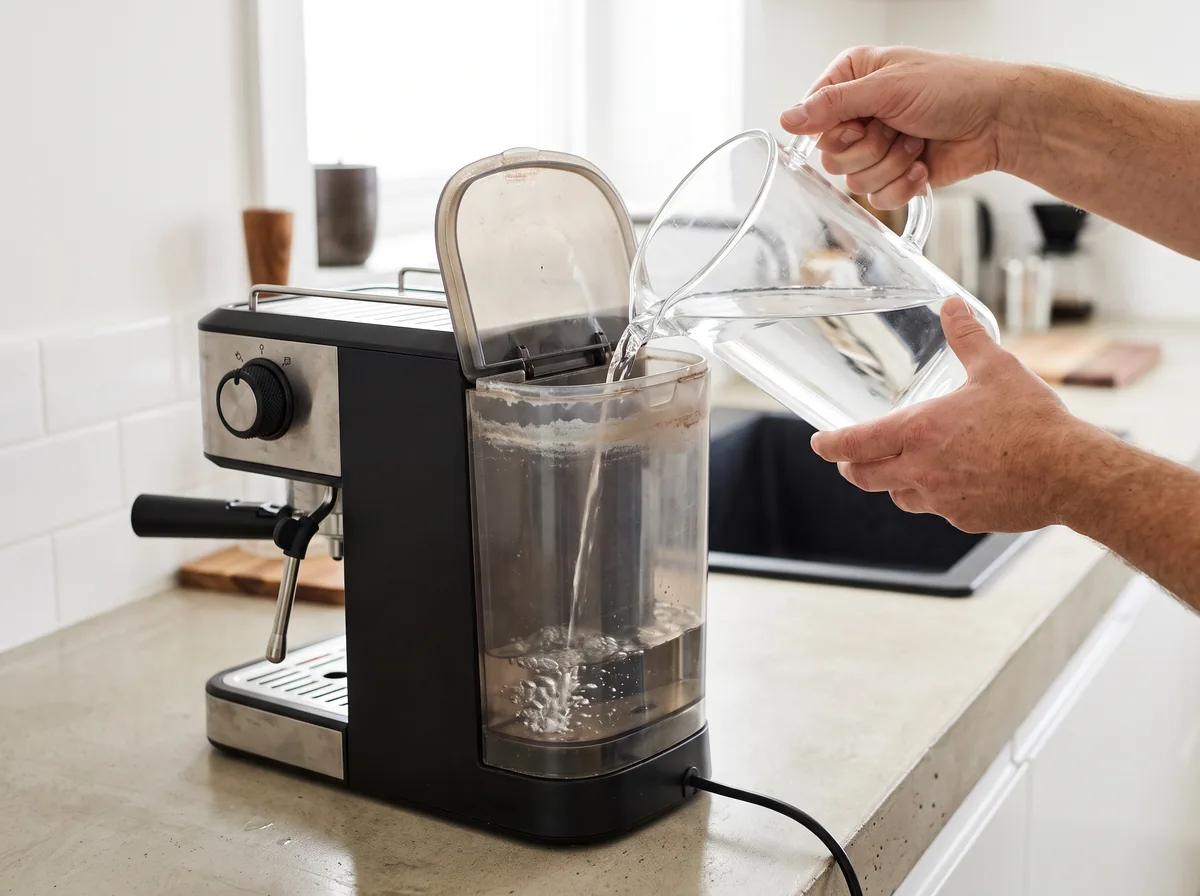
- Refill the water reservoir with fresh filtered water instead of topping off old water.
Pro tip
Avoid washing your portafilter with standard dish soap, which leaves behind subtle residues that spoil espresso flavor. Use hot water for daily rinses and save specialized espresso cleaner for weekly soaks, followed by a thorough rinse.
Descaling: the one task Jacksonville homes cannot skip
Much of Jacksonville relies on hard groundwater drawn from the Floridan aquifer, which contains high levels of dissolved calcium and magnesium. These minerals form water hardness, as measured by the U.S. Geological Survey. Every time your machine heats hard water, a layer of scale bakes onto the internal lines and heating elements.
Scale insulates heating components, causing the machine to work harder to reach temperature. Over time, it narrows internal passages and restricts water flow until the pump strains without delivering water. Descaling every 4 to 8 weeks with a dedicated descaling solution dissolves buildup before it causes permanent damage. Using filtered water in your reservoir helps reduce how quickly scale accumulates.
Did you know
The white crust that forms around drip trays or water reservoirs is the same scale forming inside internal boilers and water lines. Visible mineral deposits usually indicate hidden scale buildup inside the unit.
A simple espresso machine maintenance schedule
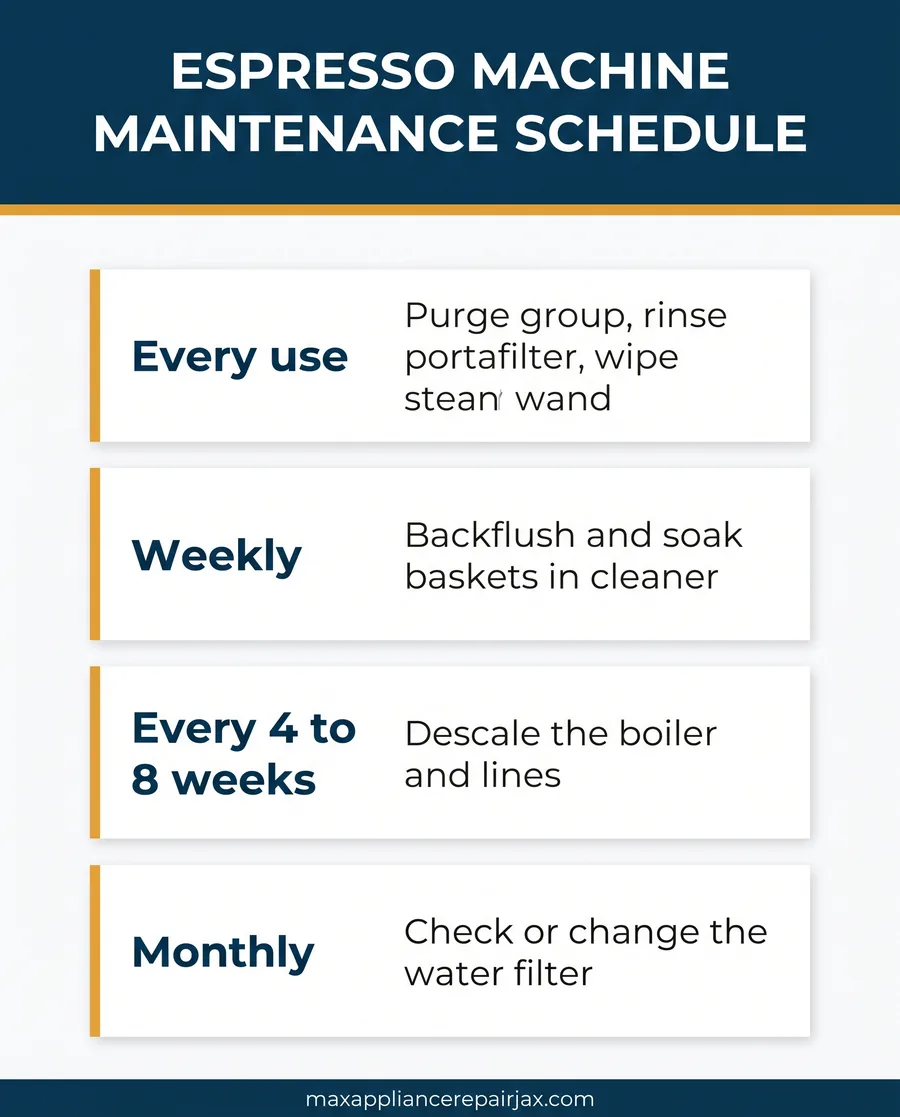
Follow this checklist to keep your machine in peak condition. Frequencies are based on daily home brewing; heavier daily use or harder tap water requires more frequent care.
| Task | How often | Why it matters |
|---|---|---|
| Purge group head and rinse portafilter | Every use | Clears grounds and oil before they set |
| Wipe and purge the steam wand | Every use | Stops milk from drying and clogging the tip |
| Empty and rinse the drip tray | Daily | Prevents mold, odors, and overflow |
| Backflush with cleaner (if equipped) | Weekly | Strips oil from the group head and valve |
| Soak portafilter and baskets | Weekly | Removes bitter coffee oil residue |
| Descale internal lines and boiler | Every 4 to 8 weeks | Dissolves scale caused by Jacksonville hard water |
| Check or replace the water filter | Every 1 to 2 months | Slows mineral buildup rate |
| Replace group gasket and screen | Yearly (or as needed) | Maintains a proper seal and even extraction |
When cleaning won’t fix it: signs you need a technician
Proper maintenance solves most performance issues, but mechanical or electrical faults require professional repair. Stop cleaning and contact a technician if you notice any of these signs:
- The pump runs loudly or continuously without delivering water to the group head, even after descaling.
- Water leaks from the base or housing rather than an external fitting.
- The machine trips circuit breakers or the power cord gets excessively hot.
- Steam or hot water flows continuously when the machine is turned off.
- Water fails to heat or shots remain cold despite full power.
Download the free quick guide
A simple guide to daily cleaning, descaling, and practical espresso machine maintenance for home users.
Download the free espresso machine maintenance checklist (PDF)
Frequently Asked Questions
Consistent espresso machine maintenance keeps your equipment performing properly for years. When a pump stops working, internal scale blocks water flow, or your unit develops a leak, our technicians service home coffee and espresso equipment throughout Jacksonville. Contact Max Appliance Repair to schedule expert service today.
