

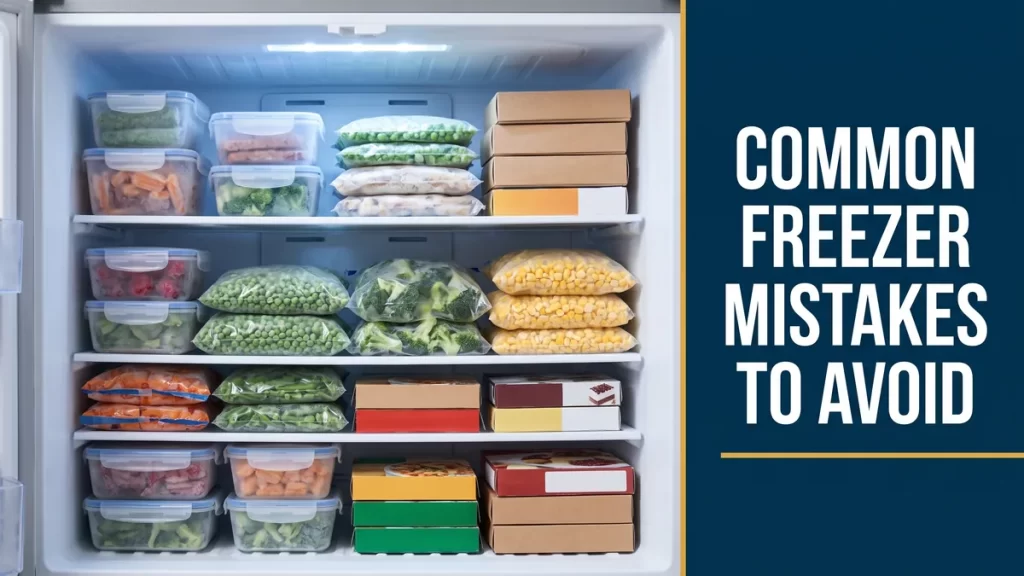
Most of the common freezer mistakes that shorten an appliance’s life and spoil food are habits, not breakdowns. Overpacking, ignoring the door seal, setting the wrong temperature, and letting frost pile up quietly wear a freezer down until one hot Jacksonville afternoon it finally gives out. The good news: every one of these is easy to avoid once you know it, and fixing your habits often prevents a call about a freezer that has stopped keeping food frozen altogether.
Florida heat and humidity punish these common freezer mistakes harder than a cooler climate would. Here are the ones we see most often in Jacksonville homes, and the simple change that fixes each.
In this article
Mistake 1: guessing at the temperature
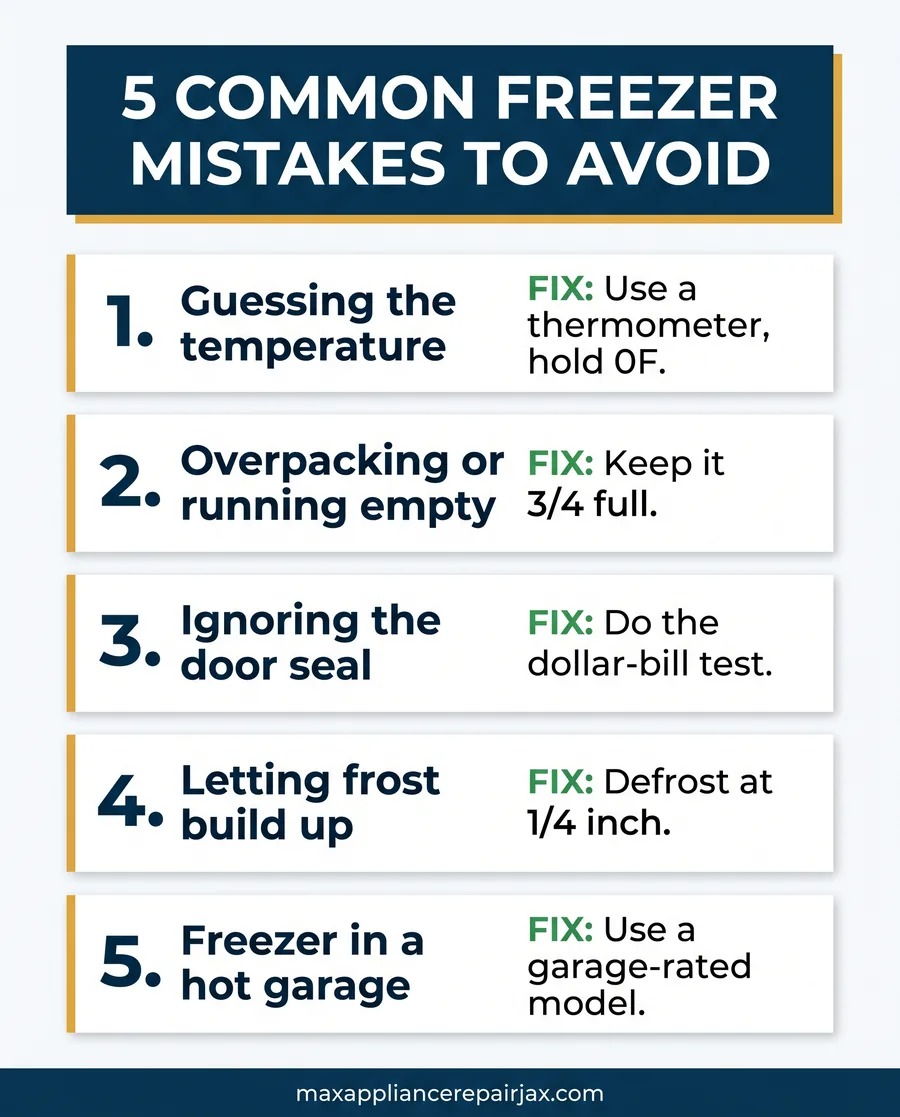
The single most common freezer mistake is trusting the dial instead of a thermometer. Freezer dials are often labeled 1 through 9 or low to high, which tells you nothing about the actual temperature inside. A freezer needs to hold 0 degrees Fahrenheit to keep food safely frozen and preserve texture and flavor.
Set it too warm and food develops ice crystals, freezer burn, and a shorter shelf life. Set it too cold and you waste energy while stressing the compressor in our already-hot climate. Drop a cheap standalone thermometer in the middle of the freezer, check it after 24 hours, and adjust from there. The ENERGY STAR refrigerator guidance is a useful reference for keeping cold storage both safe and efficient.
Did you know
A full freezer actually holds its temperature better than an empty one, because frozen food acts like thermal mass. If yours runs half-empty, filling gaps with jugs of water can help it recover faster every time the door opens, which matters a lot in a warm Florida kitchen.
Mistake 2: overpacking or underfilling
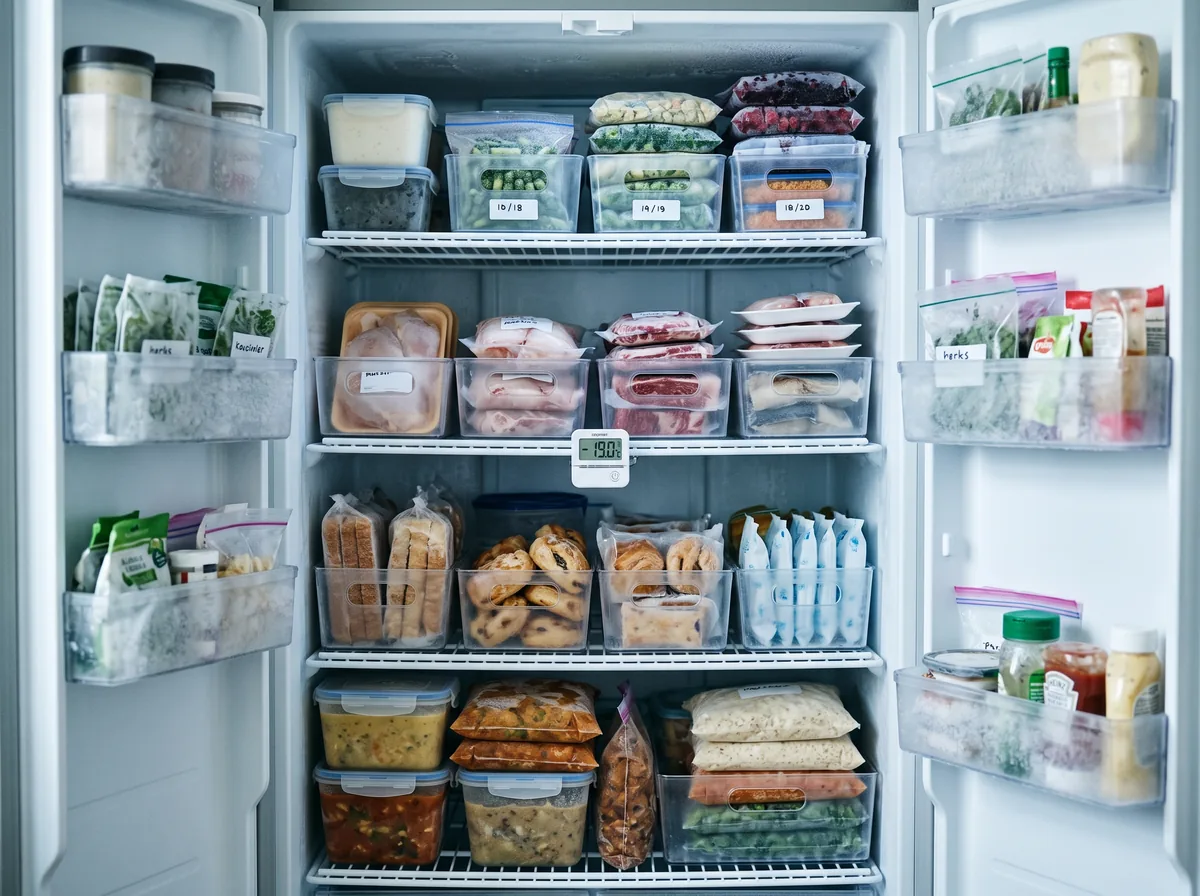
There is a sweet spot, and most people miss it in one direction or the other. Cram the freezer so full that bags press against the interior vents and you choke off the airflow that keeps everything cold. Run it nearly empty and it struggles to hold temperature every time the door opens, working the compressor harder than it needs to.
Aim for about three-quarters full, with a clear path in front of the vents (usually along the back or top wall). Leave a little breathing room so cold air can move. If you tend to run empty, those water jugs do double duty as thermal mass and as an emergency water supply during hurricane season.
Pro tip
Keep a loose inventory taped to the door. It sounds fussy, but it means you open the freezer, grab what you need, and close it fast instead of standing there with the door open in an 80-degree kitchen. Every extra second of open door in Florida means more humid air and frost inside.
Mistake 3: ignoring the door seal
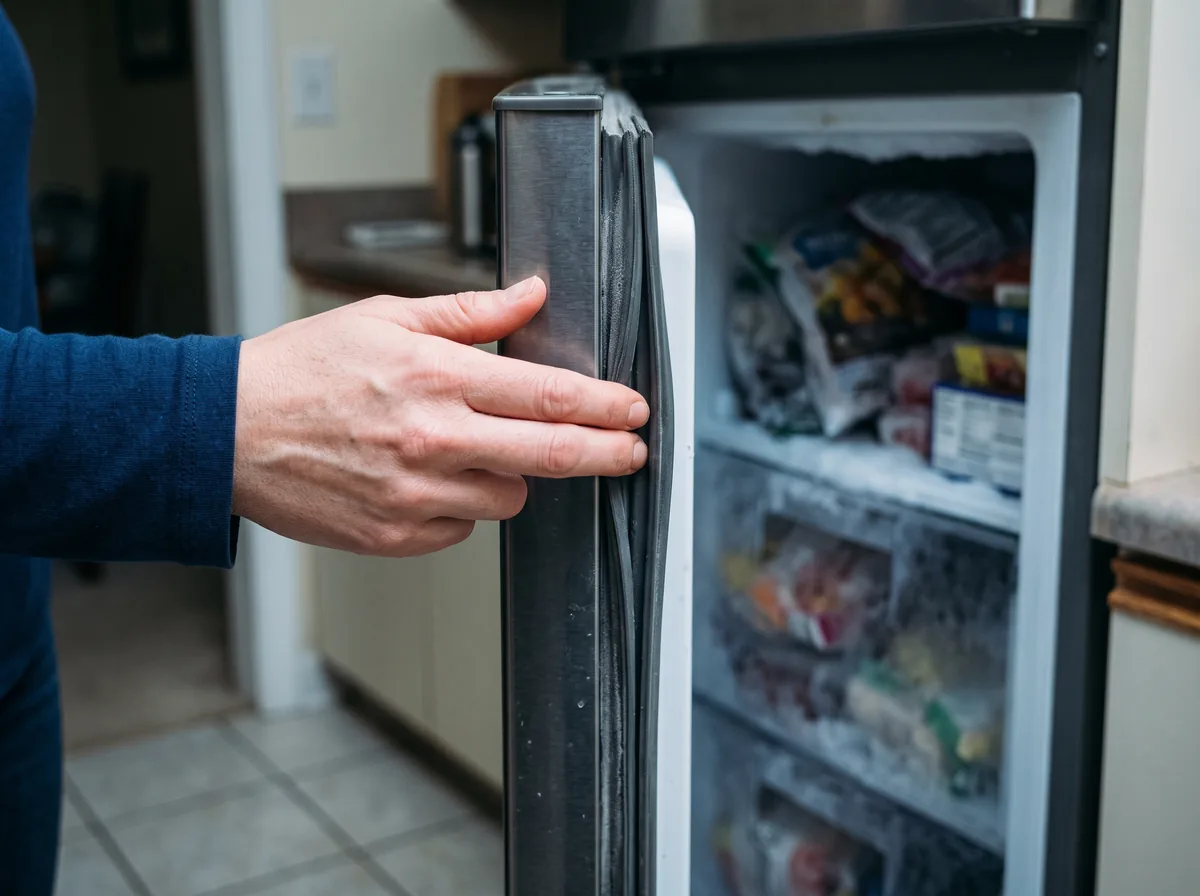
Among common freezer mistakes, a neglected door gasket is the sneakiest, because the damage happens silently. A cracked, stiff, or dirty seal lets cold air leak out and humid Florida air seep in around the clock. The freezer runs longer to compensate, frost builds faster, and your power bill creeps up while nothing looks obviously wrong.
Test it in ten seconds: close the door on a dollar bill and try to pull it out. If it slides free with no drag, the seal is not doing its job. Wipe the gasket clean every couple of months, since sticky spills and crumbs break the seal too. A worn gasket is usually a simple, inexpensive replacement, and it is the same principle that keeps a refrigerator that will not stay cold running efficiently.
Mistake 4: letting frost build up
A little frost is normal. A thick, creeping layer is a mistake waiting to cost you. On manual-defrost freezers, homeowners often let frost grow into an inch-thick shell before dealing with it. That ice insulates the walls, forces the unit to run harder, and steals usable space. Even frost-free models frost up faster in Jacksonville because every door opening invites humid air inside.
If you have a manual-defrost chest or upright freezer, defrost it whenever frost reaches about a quarter-inch. For frost-free units, heavy or fast frosting is a clue that the door seal or the defrost cycle needs attention, not that you should keep chipping at the ice. Never use a knife or sharp tool to hack frost off; you can puncture a refrigerant line and turn a chore into a replacement.
Save your money
A freezer buried in frost can use noticeably more electricity than a clean one, because it fights its own ice to stay cold. Keeping frost in check is one of the cheapest ways to trim an appliance’s running cost, and it is completely free to do.
Mistake 5: bad placement in a hot garage
The backup freezer in the garage is a Jacksonville tradition, and it is also where a lot of these machines go to die early. Garage suitability depends on the freezer’s rated ambient-temperature range. Check the model’s manual before placing it in an unconditioned garage. Some units even stop cycling correctly when the surrounding air gets too hot.
If you must keep a freezer in the garage, look for a model rated for garage or high-ambient use, give it a few inches of clearance for airflow, and keep the condenser coils clean. Better still, put it in a cooler part of the house. The heat load is the same reason a dryer that runs in a hot laundry room can strain. Appliances and high heat do not mix.
Download the free quick guide
A one-page checklist of the habits to avoid so your freezer lasts longer and runs cheaper.
Frequently Asked Questions
Fixed your habits, avoided these common freezer mistakes, and the freezer still frosts over, runs nonstop, or will not hold its cold? That points to a mechanical fault, not a bad routine. Max Appliance Repair diagnoses and repairs freezers throughout Jacksonville, from Julington Creek and Bartram Park to the Westside and Atlantic Beach. Schedule a service visit and we will find what is really going on inside.
